
 EN
EN
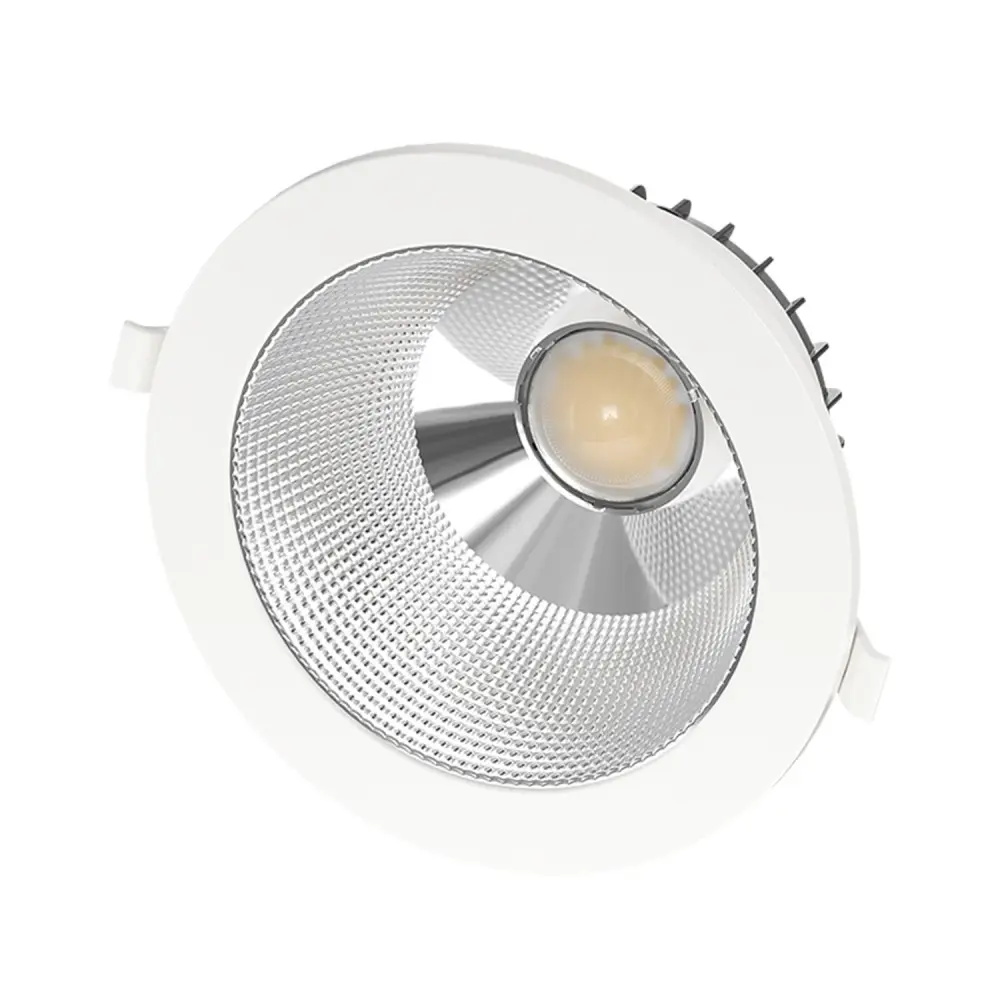
Understanding LED bulb brightness in relation to conventional lighting technologies remains a critical consideration for facility managers, procurement specialists, and industrial operations planning lighting upgrades or retrofits. The transition from incandescent and fluorescent bulbs to LED technology has fundamentally changed how we measure, compare, and evaluate lighting performance. While traditional bulbs relied heavily on wattage as a brightness indicator, LED bulb brightness requires a more nuanced understanding of lumens, efficacy, and practical light output that directly impacts workspace visibility, energy costs, and operational efficiency across commercial and industrial environments.
The comparison between LED bulb brightness and conventional bulb output extends beyond simple wattage equivalencies to encompass spectral quality, directional characteristics, thermal performance, and sustained light output over operational lifespan. Conventional incandescent bulbs convert approximately 90 percent of consumed energy into heat rather than visible light, while compact fluorescent lamps suffer from lumen depreciation and warm-up periods that affect immediate brightness availability. LED technology delivers superior luminous efficacy measured in lumens per watt, providing equivalent or greater perceived brightness while consuming substantially less electrical power. This fundamental difference in energy conversion efficiency explains why a 9-watt LED tube can replace a 20-watt fluorescent tube while maintaining comparable or enhanced illumination levels in industrial applications.
Understanding the Fundamental Differences in Light Output Measurement
Lumens Versus Wattage as Brightness Indicators
The shift from wattage-based to lumen-based brightness evaluation represents the most significant conceptual change when comparing LED bulb brightness with conventional lighting sources. Traditional incandescent bulbs established a mental correlation between power consumption and light output, where consumers learned that a 60-watt bulb appeared brighter than a 40-watt bulb. This relationship existed because incandescent technology exhibited relatively consistent efficacy across wattage ratings, typically producing 10 to 17 lumens per watt depending on bulb design and filament configuration. LED technology breaks this historical pattern by achieving 80 to 150 lumens per watt in commercial products, fundamentally decoupling brightness perception from power consumption metrics.
Lumens measure the total quantity of visible light emitted by a source in all directions, providing an objective standard for comparing LED bulb brightness against conventional alternatives regardless of underlying technology or energy consumption. A standard 60-watt incandescent bulb produces approximately 800 lumens, while an equivalent LED bulb delivering the same 800 lumens typically consumes only 8 to 10 watts. This dramatic difference in efficacy means that comparing LED bulb brightness based solely on wattage ratings leads to significant underestimation of actual light output. Industrial facilities replacing fluorescent fixtures with LED alternatives must evaluate lumens, color temperature, and distribution patterns rather than simply matching wattage specifications from legacy lighting systems.
Efficacy and Energy Conversion Efficiency
Luminous efficacy, expressed as lumens per watt, quantifies how effectively a light source converts electrical energy into visible illumination, serving as the primary technical metric for comparing LED bulb brightness efficiency against conventional technologies. Incandescent bulbs operate at the lowest efficacy range of 10 to 17 lumens per watt because the incandescent process generates broad-spectrum electromagnetic radiation predominantly in the infrared range, with only a small portion falling within the visible spectrum. Halogen incandescents improve slightly to 12 to 22 lumens per watt through enhanced filament design and halogen gas fill, but still lose most input energy to heat generation rather than useful illumination.
Compact fluorescent lamps improved conventional lighting efficacy to 35 to 60 lumens per watt by using gas discharge and phosphor coatings to generate visible light, representing a substantial efficiency gain over incandescent technology but still falling short of modern LED performance. Contemporary LED bulb brightness benefits from semiconductor light emission that directly produces photons in the visible spectrum with minimal infrared or ultraviolet waste energy. Quality LED products for commercial and industrial applications consistently achieve 90 to 130 lumens per watt, with specialized high-efficacy designs reaching 150 lumens per watt or higher. This efficiency advantage translates directly into lower operating costs, reduced cooling loads, and smaller electrical infrastructure requirements for equivalent illumination levels.
Directional Light Output and Application Efficiency
The directional nature of LED light emission fundamentally affects how LED bulb brightness compares with omnidirectional conventional sources in practical applications, particularly in task lighting, directional fixtures, and focused illumination scenarios. Incandescent and fluorescent bulbs emit light in nearly all directions, requiring reflectors, diffusers, and optical systems to redirect illumination toward intended target areas. These optical components absorb or redirect 30 to 60 percent of the generated light, meaning that actual delivered illumination at the work surface may be substantially less than the bulb's rated lumen output measured in an integrating sphere under laboratory conditions.
LED technology produces light from a small semiconductor junction, naturally emitting in a hemispherical pattern rather than a full sphere, which improves application efficiency in many fixture designs without requiring extensive optical redirection. This directional characteristic means that LED bulb brightness measurements translate more efficiently into task surface illumination compared with conventional sources that lose significant output to fixture absorption and misdirection. Tubular LED replacements for fluorescent fixtures particularly benefit from this directional advantage, delivering more lumens to horizontal work surfaces below the fixture while reducing wasted light directed back into the fixture housing or ceiling cavity where it contributes no useful illumination.
Practical Brightness Equivalencies Across Lighting Technologies
Residential and Commercial Equivalency Standards
Establishing practical LED bulb brightness equivalencies with conventional incandescent and halogen sources requires understanding both absolute lumen output and perceived brightness across different color temperatures and spectral distributions. Industry packaging standards have developed equivalency guidelines that help consumers and facility managers select LED replacements that match or exceed the illumination provided by familiar conventional bulb types. A 40-watt incandescent bulb producing approximately 450 lumens corresponds to a 6 to 8 watt LED bulb, while a 60-watt incandescent at 800 lumens equates to an 8 to 12 watt LED depending on efficacy and design approach.
Higher-output conventional bulbs follow similar proportional relationships, with 75-watt incandescents at 1100 lumens replaced by 13 to 15 watt LEDs, and 100-watt incandescents at 1600 lumens matched by 16 to 20 watt LED alternatives. These equivalencies account for both measured lumen output and perceived brightness under typical viewing conditions, though individual perception may vary based on color temperature selection, fixture design, and room surface reflectances. Commercial and industrial applications require more precise specifications beyond simple equivalencies, evaluating maintained illuminance at specific task surfaces, uniformity ratios, and photometric performance aligned with IES lighting design standards rather than relying on residential-oriented equivalency claims.

Fluorescent to LED Brightness Comparisons
Comparing LED bulb brightness with linear and compact fluorescent sources requires attention to both initial lumen output and the substantial lumen depreciation that affects fluorescent performance throughout operational life. A standard T8 fluorescent tube rated at 32 watts typically produces 2800 to 3200 initial lumens depending on phosphor technology and ballast type, but loses 10 to 30 percent of this output over its rated lifespan due to phosphor degradation and mercury depletion. LED tubes designed for direct fluorescent replacement typically consume 12 to 18 watts while producing 1600 to 2400 lumens, which may appear lower than fluorescent specifications but actually delivers comparable or superior maintained illumination over the fixture's operational life.
The comparison becomes more favorable for LED technology when accounting for directional output, instant-on capability without warm-up delays, and consistent LED bulb brightness throughout the rated 50,000-hour lifespan compared with rapidly degrading fluorescent performance beyond 15,000 hours of operation. Compact fluorescent lamps exhibit even more pronounced lumen depreciation, often losing 20 to 40 percent of initial brightness within the first year of operation while LED alternatives maintain 90 percent or more of initial output throughout their extended operational life. This sustained performance characteristic means that LED retrofits specified for 70 to 80 percent of initial fluorescent lumen output actually deliver superior average illumination over multi-year operational periods in commercial and industrial environments.
High-Intensity Discharge Lamp Replacements
Industrial facilities evaluating LED bulb brightness for high-bay and outdoor applications must compare LED performance against metal halide, high-pressure sodium, and mercury vapor technologies that have historically dominated high-output commercial lighting markets. A 400-watt metal halide fixture produces approximately 20,000 to 36,000 initial lumens depending on specific lamp design and ballast configuration, but requires 15 to 20 minutes to reach full brightness from a cold start and experiences 30 to 50 percent lumen depreciation over its 10,000 to 20,000-hour rated life. LED high-bay fixtures consuming 150 to 200 watts can deliver 20,000 to 30,000 lumens with instant-on capability, superior color rendering, and maintained output throughout 50,000 to 100,000-hour operational lifespans.
High-pressure sodium lamps present different comparison challenges due to their narrow yellow spectrum that produces high luminous efficacy measured in lumens per watt but poor color rendering and visual acuity compared with broader-spectrum sources. A 400-watt HPS lamp may produce 45,000 to 50,000 lumens, but the monochromatic output reduces practical visibility for detailed tasks compared with white-light sources delivering substantially fewer lumens but better spectral distribution. LED replacements for HPS applications typically operate at 150 to 250 watts producing 20,000 to 35,000 lumens, which initially appears significantly lower but provides equivalent or superior task visibility due to improved color rendering and spectral quality that enhances contrast detection and visual performance in industrial environments.
Color Temperature and Spectral Distribution Impact on Perceived Brightness
Correlated Color Temperature Effects
The correlated color temperature of LED bulb brightness significantly influences perceived illumination levels even when measured lumen output remains constant, creating apparent brightness differences between LED and conventional sources operating at different color temperatures. Traditional incandescent bulbs operate at 2700 to 3000 Kelvin producing warm yellowish light that appears comfortable in residential settings but may seem dim in commercial task environments. Fluorescent tubes typically range from 3500 to 5000 Kelvin depending on phosphor formulation, with cooler temperatures appearing subjectively brighter due to increased blue spectral content that stimulates the eye's photopic sensitivity curve more effectively at higher illuminance levels.
LED technology offers flexible color temperature selection from warm 2700K through neutral 4000K to cool 5000K and beyond, allowing facility managers to match or optimize perceived brightness for specific applications. Research in photometry and human visual perception demonstrates that higher color temperature sources appear brighter at equivalent lumen output due to spectral distribution effects on pupil constriction and photoreceptor response. A 4000K LED producing 1500 lumens typically appears brighter than a 2700K source delivering identical measured output, particularly in commercial and industrial settings where task performance and alertness benefit from neutral to cool white illumination. This perceptual factor allows LED retrofits to meet or exceed conventional brightness expectations while potentially using slightly lower absolute lumen output specifications.
Color Rendering and Visual Task Performance
The color rendering index and spectral power distribution of LED bulb brightness affect practical visual performance beyond simple lumen measurements, influencing task accuracy, defect detection, and perceived illumination quality in commercial and industrial applications. Conventional incandescent sources provide excellent color rendering with CRI values near 100 due to their continuous broad-spectrum emission, though their warm color temperature and low efficacy limit practical applications. Standard fluorescent lamps typically achieve CRI values of 60 to 85 depending on phosphor technology, with discontinuous spectral peaks that may render certain colors inaccurately despite adequate overall illumination levels.
Modern LED products designed for commercial and industrial use typically deliver CRI values between 80 and 95, with specialized high-CRI variants exceeding 95 for applications requiring precise color discrimination such as printing, textile inspection, and quality control operations. Higher CRI values improve visual task performance and perceived brightness quality by providing more complete spectral coverage that renders object colors more naturally and enhances contrast detection. Facilities evaluating LED bulb brightness for task-intensive operations should specify minimum CRI requirements of 80 for general commercial spaces and 90 or higher for critical visual tasks, recognizing that improved color rendering contributes to effective illumination beyond what simple lumen measurements indicate.
Spectral Optimization for Human-Centric Applications
Advanced LED technology enables spectral tuning that optimizes LED bulb brightness for specific human visual and circadian responses, creating lighting solutions that conventional broad-spectrum or line-emission sources cannot replicate. Research in photobiology and lighting science demonstrates that blue-enriched spectra between 460 and 490 nanometers strongly influence circadian rhythm regulation, alertness, and cognitive performance through melanopsin receptors in the retina. LED sources can be engineered with controlled blue spectral content that enhances perceived brightness and promotes alertness in commercial environments without requiring higher overall lumen output or energy consumption.
Conversely, LED spectra can be optimized for reduced blue content in evening and residential applications where circadian disruption should be minimized while maintaining comfortable illumination levels. This spectral flexibility allows LED bulb brightness to be tuned for specific applications and time-of-day requirements in ways that conventional incandescent and fluorescent technologies cannot achieve. Healthcare facilities, educational institutions, and shift-work industrial operations increasingly specify tunable or optimized LED spectra that support human performance and well-being alongside energy efficiency objectives, recognizing that effective lighting encompasses visual, biological, and behavioral dimensions beyond simple brightness equivalencies.
Operational Performance Factors Affecting Sustained Brightness
Lumen Maintenance and Lifetime Brightness Degradation
The long-term maintenance of LED bulb brightness represents a critical advantage over conventional lighting technologies that experience substantial lumen depreciation throughout their operational lives. Incandescent bulbs maintain relatively stable output until catastrophic filament failure, but their short 750 to 2000-hour lifespans necessitate frequent replacement that increases maintenance costs and creates periods of substandard illumination as bulbs near end-of-life. Fluorescent lamps demonstrate progressive lumen depreciation losing 10 to 30 percent of initial output over 15,000 to 30,000 hours while also experiencing increasing failure rates and longer restrike times as electrodes degrade and gas composition changes.
Quality LED products maintain 90 percent or more of initial brightness beyond 50,000 hours of operation, with gradual lumen depreciation curves specified as L70 or L80 ratings indicating the hours of operation until output decreases to 70 or 80 percent of initial lumens. This sustained performance characteristic means that LED installations can be designed for maintained illuminance rather than initial overlighting to compensate for rapid conventional lamp depreciation. Facilities implementing LED retrofits benefit from consistent illumination quality throughout multi-year maintenance cycles, eliminating the visual discomfort and productivity impacts associated with progressively dimming fluorescent installations that create uneven lighting conditions as individual lamps age at different rates across large areas.
Thermal Management and Brightness Stability
Thermal performance significantly affects LED bulb brightness stability and longevity, with junction temperature directly influencing both instantaneous light output and long-term lumen maintenance characteristics. LED semiconductor efficiency decreases at elevated temperatures, reducing light output by 10 to 30 percent when junction temperatures exceed recommended operating ranges due to inadequate heat dissipation or high ambient conditions. Quality LED products incorporate thermal management systems including heat sinks, thermal interface materials, and airflow designs that maintain junction temperatures below critical thresholds, ensuring consistent brightness output across varying ambient conditions encountered in commercial and industrial environments.
Conventional incandescent bulbs operate at extremely high filament temperatures as a fundamental aspect of their light generation mechanism, making them relatively insensitive to ambient temperature variations though highly inefficient in energy conversion. Fluorescent lamps exhibit optimal performance within narrow temperature ranges, with brightness decreasing substantially in cold environments below 50 degrees Fahrenheit and hot conditions above 100 degrees Fahrenheit affecting ballast performance and gas pressure. LED bulb brightness remains stable across wider temperature ranges when properly designed, with cold temperature operation actually improving efficacy and output compared with rated performance, while high-temperature environments require enhanced thermal management to maintain specifications but do not prevent operation as severely as fluorescent alternatives.
Power Quality and Electrical Compatibility Considerations
The sensitivity of LED bulb brightness to power quality factors including voltage variations, harmonic distortion, and flicker differs substantially from conventional lighting technologies, requiring attention to electrical compatibility in retrofit applications. Incandescent bulbs tolerate wide voltage variations with brightness changing proportionally to voltage fluctuations but no electronic sensitivity to harmonic distortion or waveform quality. Fluorescent lamps rely on magnetic or electronic ballasts that regulate lamp current, with older magnetic ballasts creating visible 120-Hz flicker and modern electronic ballasts operating at 20 to 40 kilohertz to eliminate perceptible flicker while remaining sensitive to voltage sags and surges that may prevent starting or cause premature failure.
LED drivers regulate current to the LED array, maintaining consistent brightness despite moderate voltage variations typically within plus-or-minus 10 percent of nominal voltage, with quality products operating across wider input ranges from 100 to 277 volts AC for multi-voltage compatibility. The driver's electronic design affects flicker performance, power factor, total harmonic distortion, and electromagnetic compatibility, with specification differences between economy and commercial-grade products significantly impacting installation success and lighting quality. Industrial facilities implementing LED retrofits should specify low-flicker drivers with less than 10 percent flicker index for video-intensive operations, high power factor above 0.90 for electrical efficiency, and low THD below 20 percent to minimize electrical system impacts when replacing conventional technologies with LED alternatives.
Application-Specific Brightness Requirements and LED Performance
Office and Commercial Interior Lighting Comparisons
Office environments require maintained illuminance levels typically between 300 and 500 lux at desk height for general tasks and 500 to 1000 lux for detailed work, with LED bulb brightness comparisons focused on achieving these targets while providing uniform distribution and comfortable visual conditions. Traditional troffer fixtures with T8 fluorescent lamps using three or four 32-watt tubes producing 9000 to 12000 initial lumens served as the standard commercial lighting solution, though actual delivered illuminance rarely exceeded 400 lux at desk height due to fixture efficiency losses and lumen depreciation. LED troffers consuming 35 to 45 watts and producing 4000 to 5500 lumens successfully replace these fluorescent systems while maintaining or improving task illuminance through better optical control and sustained output characteristics.
The comparison reveals that LED bulb brightness requirements for office applications focus less on matching absolute lumen output and more on achieving maintained illuminance with improved uniformity, reduced glare, and energy efficiency. Modern LED fixtures incorporate advanced optics including prismatic lenses, reflector designs, and edge-lit architectures that deliver light more efficiently to task surfaces while reducing ceiling cavity losses that plagued conventional fluorescent installations. The result is that LED office lighting consuming 40 to 60 percent less energy than fluorescent alternatives delivers equivalent or superior practical brightness where occupants work, demonstrating that effective illumination encompasses distribution quality and maintenance factors beyond simple lumen comparisons.
Industrial and Manufacturing Facility Requirements
Industrial environments demand robust LED bulb brightness that sustains performance under challenging conditions including temperature extremes, vibration, dust contamination, and extended operating hours that quickly degrade conventional lighting technologies. High-bay applications in warehouses, manufacturing plants, and distribution centers historically relied on 400-watt metal halide fixtures producing 24000 to 36000 lumens but requiring long warm-up periods, frequent relamping, and significant maintenance access challenges in installations 20 to 40 feet above floor level. LED high-bay fixtures delivering 150 to 200 watts and 18000 to 28000 lumens provide equivalent or superior floor-level illuminance through improved optical control while eliminating maintenance disruptions and enabling instant-on capability for occupancy-based control strategies.
The practical brightness advantage extends beyond simple lumen specifications to include improved visual quality that enhances safety and productivity in industrial operations. Metal halide lamps exhibit 65 to 75 CRI with greenish spectral characteristics that distort color perception, while LED alternatives deliver 80+ CRI with neutral white spectra that improve contrast detection and reduce visual fatigue during extended shifts. The maintained brightness of LED technology ensures consistent illumination throughout 50000 to 100000-hour lifespans compared with metal halide installations that dim substantially within 10000 hours and create patchwork lighting conditions as individual fixtures age differently. Industrial facilities implementing LED retrofits report measurable improvements in defect detection, safety incident reduction, and worker satisfaction beyond energy savings, validating that effective brightness encompasses quality dimensions that simple lumen measurements do not capture.
Outdoor and Exterior Lighting Performance
Exterior applications including parking lot lighting, building facades, and perimeter security illumination present unique LED bulb brightness comparison challenges where factors including light distribution, color temperature selection, and environmental durability affect practical performance. Traditional high-pressure sodium fixtures dominated outdoor commercial lighting with 250 to 400-watt lamps producing 27000 to 50000 lumens, but the monochromatic yellow output limits visibility and creates poor color rendering that reduces security camera effectiveness and makes color identification nearly impossible. LED area fixtures consuming 100 to 200 watts and delivering 12000 to 30000 lumens provide substantially better visual quality despite lower absolute lumen output, with neutral white spectra improving facial recognition, vehicle identification, and general visibility.
The directional nature of LED technology proves particularly advantageous in outdoor applications where conventional omnidirectional sources waste 30 to 50 percent of generated light by illuminating upward into the sky or sideways beyond intended coverage areas. LED fixtures with precise optical control deliver more measured lumens to target surfaces while reducing light trespass, sky glow, and energy waste compared with conventional alternatives. The sustained LED bulb brightness over extended lifespans eliminates the dramatic performance degradation that creates dark spots in parking lots and compromises security as HPS lamps lose 40 to 60 percent of initial output over 15000 to 20000 hours of operation. Outdoor LED retrofits typically achieve 50 to 70 percent energy reduction while maintaining or improving practical illumination effectiveness across the installation.
FAQ
What lumen output should I look for when replacing a 60-watt incandescent bulb with an LED?
A 60-watt incandescent bulb produces approximately 800 lumens, so you should select an LED bulb rated between 800 and 900 lumens to achieve equivalent brightness. Most LED bulbs in this output range consume only 8 to 12 watts while delivering comparable or slightly brighter illumination. Pay attention to color temperature selection, as cooler temperatures around 4000K may appear brighter than warm 2700K options despite identical lumen ratings due to spectral distribution effects on perceived brightness.
Why do LED tubes with lower wattage than fluorescent tubes provide similar brightness?
LED tubes achieve similar brightness at lower wattage due to superior luminous efficacy, typically delivering 100 to 140 lumens per watt compared with fluorescent efficacy of 60 to 90 lumens per watt including ballast losses. Additionally, LED tubes emit light directionally toward the work surface rather than omnidirectionally like fluorescent lamps, reducing fixture losses and improving application efficiency. The sustained lumen output of LED technology over its operational life also provides better maintained illuminance compared with fluorescent lamps that lose 20 to 30 percent of initial brightness over time.
Does LED bulb brightness decrease over time like conventional bulbs?
LED bulbs experience gradual lumen depreciation rather than the sudden failure typical of incandescent bulbs or the rapid degradation seen in fluorescent lamps. Quality LED products maintain 90 percent of initial brightness for 50000 hours or more, with specifications indicating L70 or L80 ratings that define the operating hours until output decreases to 70 or 80 percent of initial lumens. This gradual, predictable depreciation allows lighting designs to account for end-of-life performance while still maintaining adequate illumination, unlike fluorescent installations that dim substantially and unevenly across fixtures.
Can LED brightness be compared directly to halogen and metal halide sources?
Direct lumen-to-lumen comparison provides a starting point, but practical LED brightness evaluation against halogen and metal halide sources must consider color rendering quality, directional output efficiency, and maintained performance over operational life. LED alternatives typically require 60 to 80 percent of the rated lumens of metal halide sources to achieve equivalent practical illumination due to better color rendering, precise optical control, and instant-on capability without warm-up delays. Halogen sources operate at higher efficacy than standard incandescent bulbs but still require approximately three to four times the wattage of equivalent LED options while producing similar color quality and brightness characteristics.
Table of Contents
- Understanding the Fundamental Differences in Light Output Measurement
- Practical Brightness Equivalencies Across Lighting Technologies
- Color Temperature and Spectral Distribution Impact on Perceived Brightness
- Operational Performance Factors Affecting Sustained Brightness
- Application-Specific Brightness Requirements and LED Performance
-
FAQ
- What lumen output should I look for when replacing a 60-watt incandescent bulb with an LED?
- Why do LED tubes with lower wattage than fluorescent tubes provide similar brightness?
- Does LED bulb brightness decrease over time like conventional bulbs?
- Can LED brightness be compared directly to halogen and metal halide sources?