60 Degree High Bay Lens: Precision Lighting for Industrial and Commercial Spaces

Get a Free Quote

Our representative will contact you soon.
Email
Name
Company Name
Message
0/1000

60 degree high bay lens

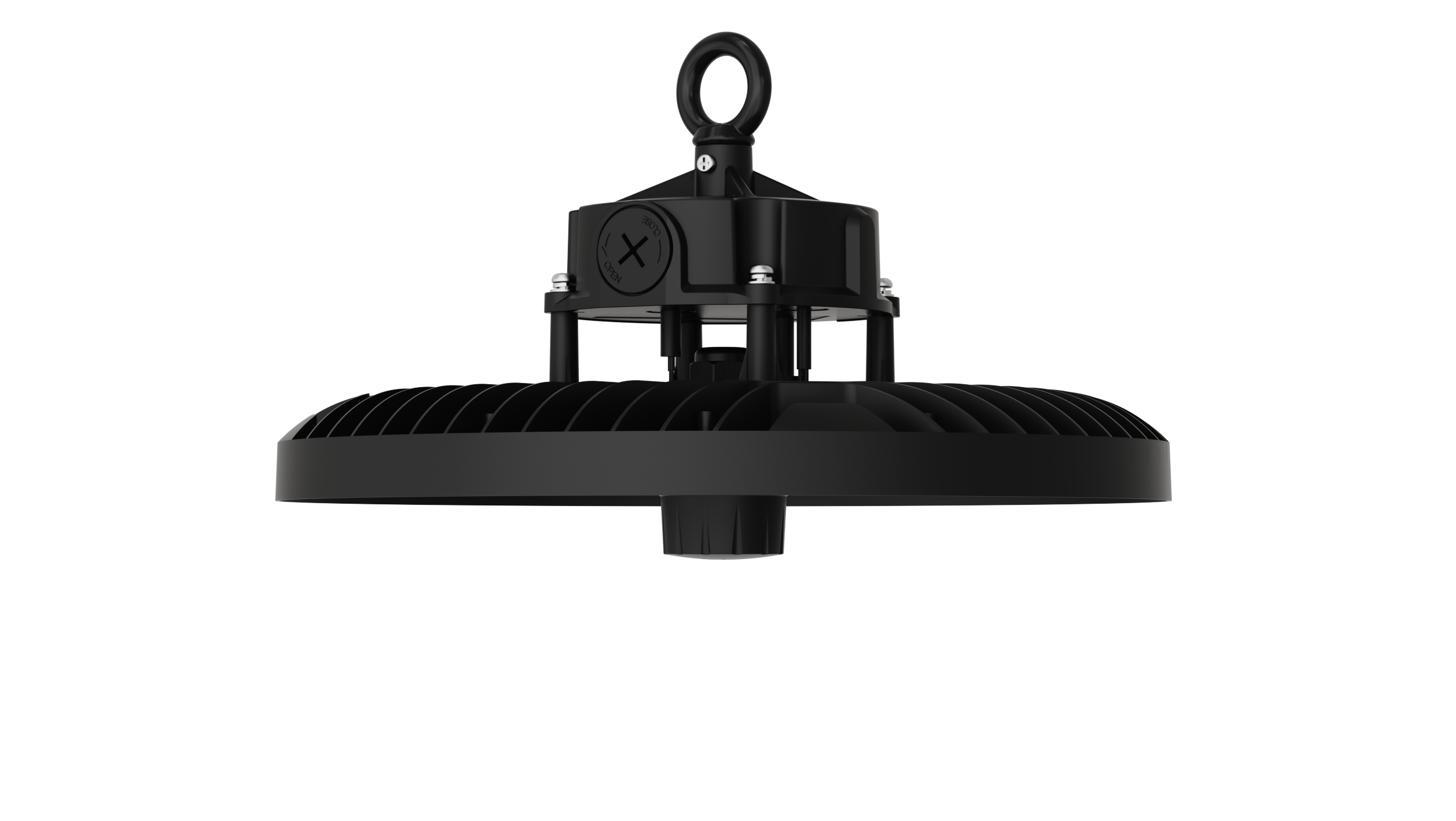
The 60 degree high bay lens is a precision optical component engineered specifically for high bay lighting fixtures used in large indoor spaces. Designed to concentrate and direct light output within a 60 degree beam angle, this lens plays a critical role in maximizing illumination efficiency while minimizing wasted light. Unlike wide-angle diffusers, the 60 degree high bay lens focuses the light beam into a tighter, more controlled spread, making it ideal for environments where targeted, high-intensity lighting is essential. At its core, the 60 degree high bay lens functions by refracting light emitted from LED or other high-output light sources, shaping the beam to deliver uniform brightness across a defined area directly below the fixture. This controlled distribution reduces glare, eliminates dark spots, and ensures that work surfaces receive consistent, adequate illumination. The optical design typically incorporates total internal reflection principles and precision-molded surfaces to achieve maximum light transmission efficiency, often exceeding 92 percent transmittance. From a technological standpoint, the 60 degree high bay lens is commonly manufactured from high-grade PMMA or polycarbonate materials, both of which offer excellent optical clarity, UV resistance, and long-term durability. Advanced injection molding techniques ensure tight dimensional tolerances, which are critical for maintaining consistent beam angles across large production batches. Some versions also feature anti-glare surface treatments or micro-structured optical patterns that further enhance visual comfort and light uniformity. In terms of applications, the 60 degree high bay lens is widely deployed in warehouses, manufacturing plants, logistics centers, sports arenas, large retail stores, and industrial facilities. These environments typically feature ceiling heights ranging from 6 meters to over 15 meters, where precise light control is necessary to meet safety standards and operational requirements. The 60 degree high bay lens ensures that light reaches the floor and work areas with sufficient intensity, supporting productivity, safety compliance, and energy efficiency across all these demanding settings.


New Product Releases

When you choose a 60 degree high bay lens for your facility, you are making a practical investment that delivers real, measurable results from day one. Here is a straightforward look at why this lens stands out and what it means for your operations. First, the 60 degree high bay lens puts light exactly where you need it. Instead of scattering light in all directions and losing a significant portion to walls, ceilings, and unused areas, this lens focuses the beam into a controlled 60 degree cone. That means the light lands on your floor, your workstations, your shelving aisles, and your machinery, not on surfaces that do not need illumination. You get more usable light from the same wattage, which directly translates into lower energy bills without sacrificing brightness. Second, the 60 degree high bay lens dramatically reduces glare. In high bay environments, uncontrolled glare is a serious issue. It causes eye strain, reduces worker concentration, and can even create safety hazards when workers cannot clearly see what they are doing. The focused beam of the 60 degree high bay lens keeps light directed downward and away from eye level, creating a more comfortable visual environment. Workers can stay focused longer, make fewer errors, and operate more safely throughout their shifts. Third, this lens helps you achieve better uniformity across large floor areas. When you mount multiple high bay fixtures equipped with the 60 degree high bay lens at the correct spacing, the overlapping beam patterns create a smooth, even layer of light with minimal hot spots or dark zones. This consistency is especially important in warehouses and manufacturing floors where workers and equipment move constantly and need reliable visibility in every corner of the space. Fourth, the 60 degree high bay lens supports significant energy savings. Because the lens directs light efficiently, you can often achieve the required illuminance levels with fewer fixtures or lower wattage lamps compared to setups using wider beam angles or no lens at all. Fewer fixtures mean lower upfront installation costs, reduced maintenance frequency, and smaller electricity consumption over the lifetime of the system. For facility managers working within tight budgets, these savings add up quickly and justify the investment in quality optics. Fifth, the 60 degree high bay lens is built to last. Made from durable optical-grade materials, it resists yellowing, cracking, and degradation even in demanding industrial environments with temperature fluctuations, dust, and humidity. A lens that maintains its optical performance over years of continuous operation protects your lighting investment and keeps your facility running at peak efficiency without frequent replacements. In summary, the 60 degree high bay lens gives you focused light, reduced glare, better uniformity, lower energy costs, and long-term durability, all practical benefits that make a real difference in how your facility looks, feels, and performs every single day.

Tips And Tricks

What Are the Key Advantages of LED Panel Light in Modern Office Lighting?

31

Mar

What Are the Key Advantages of LED Panel Light in Modern Office Lighting?

Modern office environments demand lighting solutions that balance energy efficiency, visual comfort, and professional aesthetics. Among the various lighting technologies available today, LED panel light systems have emerged as the preferred choice fo...
View More
What Factors Affect the Lifespan of a High-Quality LED Bulb?

08

May

What Factors Affect the Lifespan of a High-Quality LED Bulb?

Understanding the LED bulb lifespan is essential for facility managers, procurement specialists, and business owners who seek to optimize lighting investments while reducing operational costs. While manufacturers often advertise impressive longevity ...
View More
How Does LED Bulb Brightness Compare with Conventional Bulbs?

13

May

How Does LED Bulb Brightness Compare with Conventional Bulbs?

Understanding LED bulb brightness in relation to conventional lighting technologies remains a critical consideration for facility managers, procurement specialists, and industrial operations planning lighting upgrades or retrofits. The transition fro...
View More
Why Is LED Batten Ideal for Simple and Efficient Lighting Solutions?

27

May

Why Is LED Batten Ideal for Simple and Efficient Lighting Solutions?

Modern commercial and industrial environments demand lighting solutions that combine simplicity with performance, and LED batten fixtures have emerged as a leading choice for spaces requiring straightforward yet effective illumination. These linear l...
View More

Get a Free Quote

Our representative will contact you soon.
Email
Name
Company Name
Message
0/1000

60 degree high bay lens

Precision Beam Control for Maximum Light Efficiency

Precision Beam Control for Maximum Light Efficiency

One of the most compelling reasons to choose the 60 degree high bay lens is its ability to deliver precision beam control that maximizes every lumen your fixture produces. In any large indoor facility, light that misses its target is wasted energy. Wide-angle lenses or bare LED modules scatter light broadly, sending a substantial portion toward walls, structural beams, and other non-functional surfaces. The 60 degree high bay lens solves this problem by shaping the emitted light into a focused, well-defined 60 degree cone that drives illumination straight down to the areas that matter most. This precision is achieved through the lens geometry itself. The optical surfaces of the 60 degree high bay lens are carefully calculated to refract incoming light rays and redirect them within the desired angular range. Total internal reflection channels are often incorporated into the lens body, capturing light that would otherwise escape at oblique angles and redirecting it into the primary beam. The result is a fixture that delivers a higher percentage of its total light output directly onto the target surface, a metric known as the coefficient of utilization, which is significantly higher with the 60 degree high bay lens compared to uncontrolled alternatives. For facility operators, this translates into a direct financial benefit. When more of the light reaches the work surface, you need less total wattage to achieve the required illuminance level. A well-designed lighting layout using the 60 degree high bay lens can reduce the number of fixtures needed in a space, cutting both installation costs and ongoing electricity expenses. Over a ten-year operational period, the cumulative energy savings from using the 60 degree high bay lens instead of a less efficient optical solution can represent tens of thousands of dollars for a mid-sized warehouse or manufacturing plant. Beyond economics, precision beam control also supports compliance with lighting standards. Many industrial and commercial facilities must meet minimum illuminance requirements set by occupational safety regulations or industry guidelines. The 60 degree high bay lens makes it straightforward to design a lighting system that consistently meets these standards across the entire floor area, giving facility managers confidence that their environment is both safe and compliant.
Superior Glare Reduction for a Safer and More Comfortable Workspace

Superior Glare Reduction for a Safer and More Comfortable Workspace

Glare is one of the most underestimated problems in industrial and commercial lighting, and the 60 degree high bay lens addresses it directly and effectively. In high bay environments, fixtures are mounted at significant heights, and without proper optical control, the intense light from high-output LEDs can create disabling or discomfort glare that affects everyone working below. The 60 degree high bay lens is specifically designed to contain the light beam within a controlled angular range, preventing stray light from entering the visual field of workers at eye level and dramatically reducing the unified glare rating of the overall lighting installation. The mechanism behind this glare reduction is straightforward. By limiting the beam spread to 60 degrees, the 60 degree high bay lens ensures that light exits the fixture in a downward-focused pattern. Light rays that would otherwise travel at high angles toward the horizontal, where they are most likely to cause glare, are either redirected downward or absorbed within the optical system. Workers looking across the facility see fixtures that appear significantly less bright and harsh compared to bare or wide-angle alternatives, even when the actual light output on the floor remains the same or higher. The practical impact of this glare reduction is substantial. Studies in occupational health consistently show that reduced glare leads to lower rates of eye fatigue, fewer headaches, and improved concentration among workers. In precision manufacturing, quality control, and logistics operations where workers must read labels, inspect products, or operate machinery with fine tolerances, the visual clarity provided by the 60 degree high bay lens directly supports accuracy and productivity. Fewer errors, faster task completion, and reduced worker fatigue are all outcomes that facility managers can realistically expect when upgrading to fixtures equipped with the 60 degree high bay lens. Safety is another critical dimension. Glare can temporarily impair vision, creating dangerous moments in environments where forklifts, heavy machinery, and pedestrians share the same space. By minimizing glare through the use of the 60 degree high bay lens, facility operators reduce the risk of accidents caused by visual impairment, contributing to a safer workplace and potentially lowering insurance costs and liability exposure over time.
Long-Term Durability and Consistent Optical Performance

Long-Term Durability and Consistent Optical Performance

Investing in lighting infrastructure for a large facility is a long-term commitment, and the durability of every component matters. The 60 degree high bay lens is engineered to maintain its optical performance over years of continuous operation in demanding environments, making it a reliable choice for facilities that cannot afford frequent maintenance shutdowns or premature component replacements. The materials used in manufacturing the 60 degree high bay lens are selected specifically for their optical and mechanical properties in industrial settings. High-grade PMMA, also known as acrylic, and optical polycarbonate are the two most common choices. Both materials offer exceptional light transmittance, typically above 92 percent, which means very little light is lost as it passes through the lens. More importantly, both materials are formulated to resist the yellowing and hazing that can degrade optical performance over time when lesser materials are exposed to UV radiation, heat cycling, and airborne contaminants common in warehouses and manufacturing plants. The manufacturing process of the 60 degree high bay lens also contributes to its longevity. Precision injection molding under tightly controlled conditions produces lenses with consistent wall thickness, smooth optical surfaces, and accurate beam angle geometry. These characteristics ensure that every 60 degree high bay lens in a large installation performs identically, maintaining uniform light distribution across the facility throughout the product lifetime. Dimensional stability under thermal stress is another key advantage, as the lens retains its shape and optical properties even when exposed to the temperature swings typical of industrial environments. From a maintenance perspective, the durability of the 60 degree high bay lens reduces the total cost of ownership significantly. Facilities that operate around the clock, such as logistics hubs, cold storage warehouses, and continuous manufacturing lines, cannot afford frequent lighting maintenance. A lens that holds its clarity and beam accuracy for 50,000 hours or more aligns with the operational lifespan of modern LED drivers and modules, meaning the entire fixture can be treated as a single long-life unit. This reliability simplifies maintenance planning, reduces labor costs, and ensures that the facility continues to meet its illuminance and safety requirements without interruption, delivering consistent value from the 60 degree high bay lens investment year after year.

Get a Free Quote

Our representative will contact you soon.
Email
Name
Company Name
Message
0/1000