90 Degree Lens High Bay LED Fixtures | Precision Lighting for Industrial Spaces

Get a Free Quote

Our representative will contact you soon.
Email
Name
Company Name
Message
0/1000

90 degree lens high bay

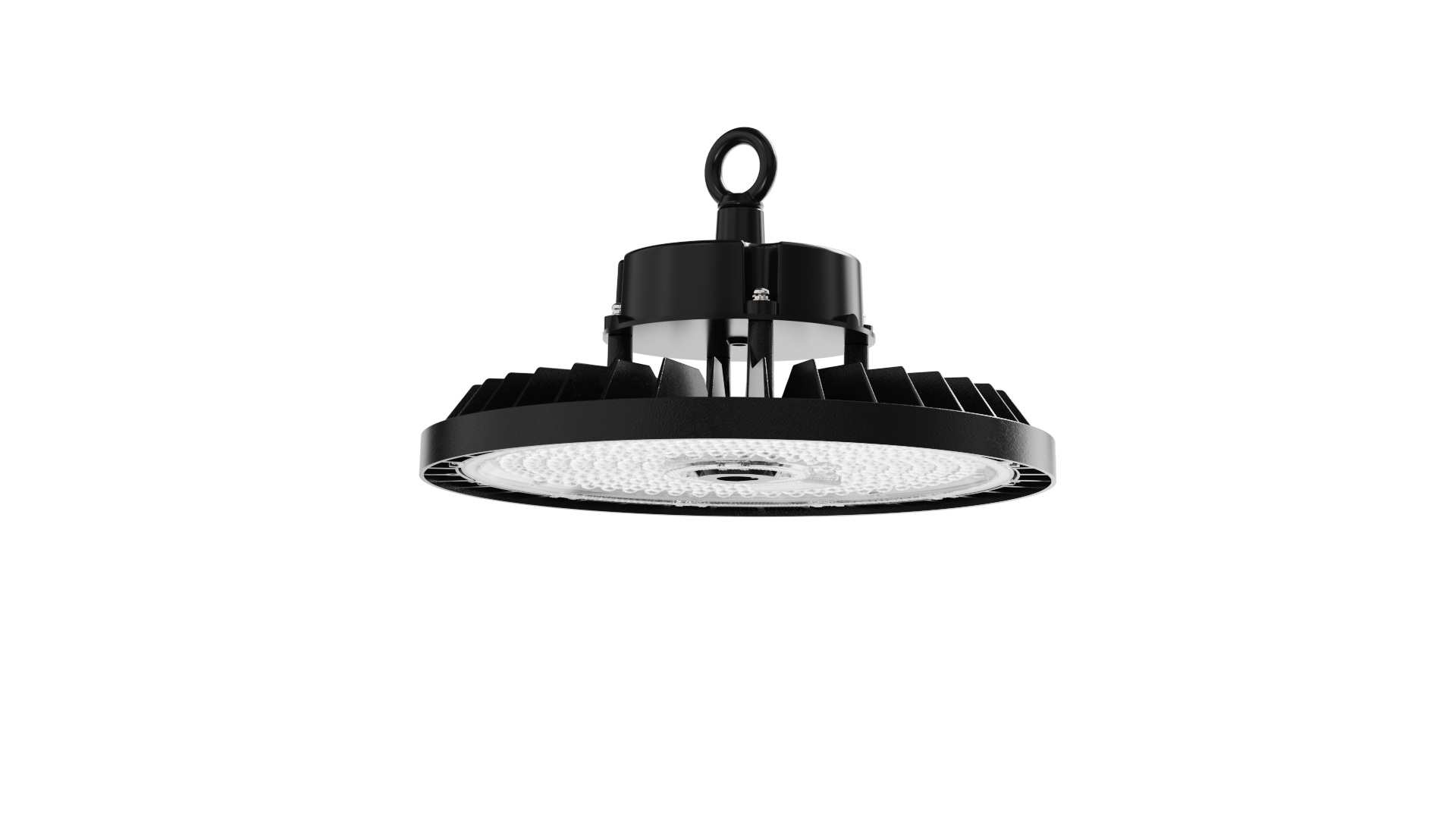
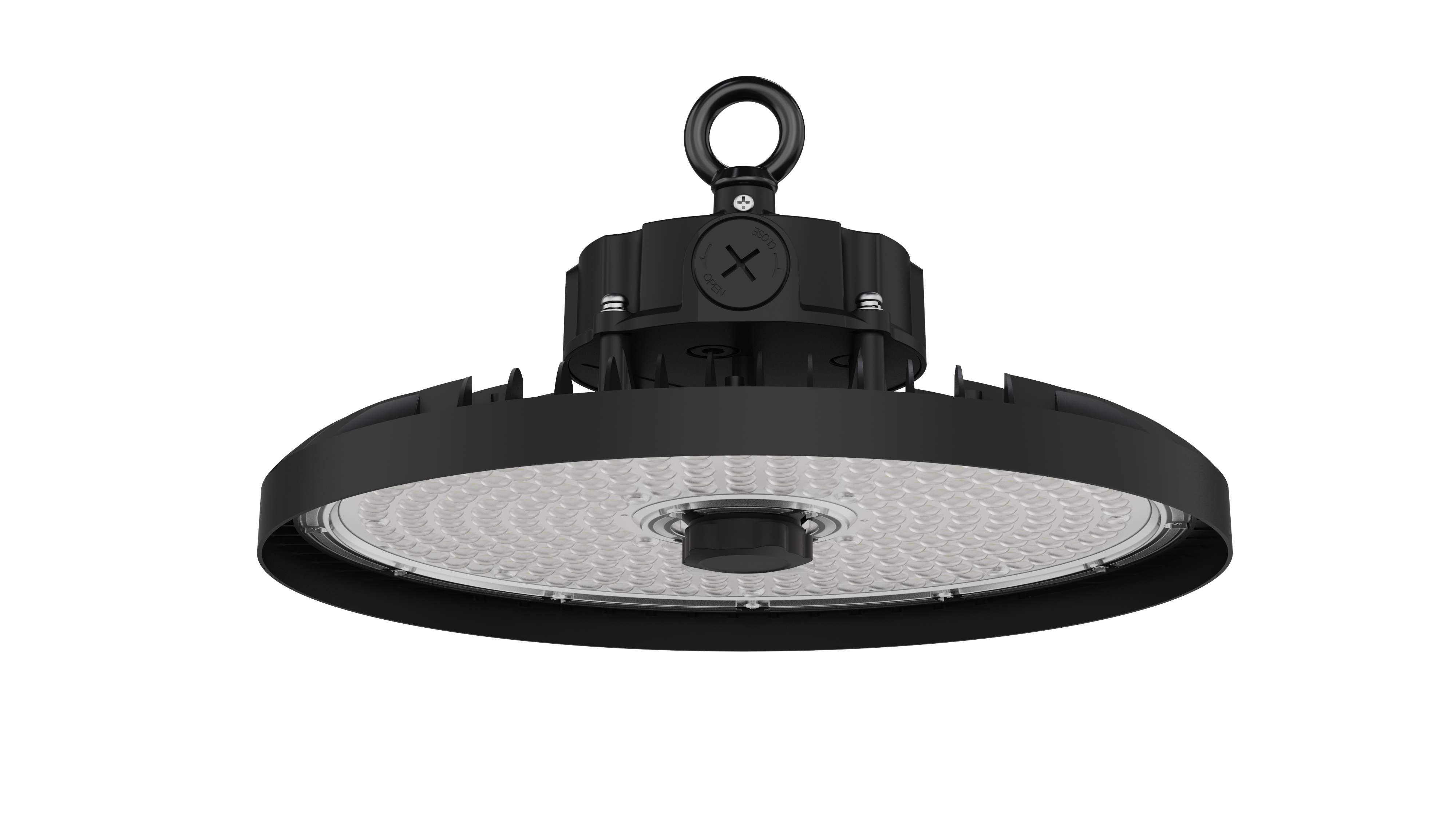
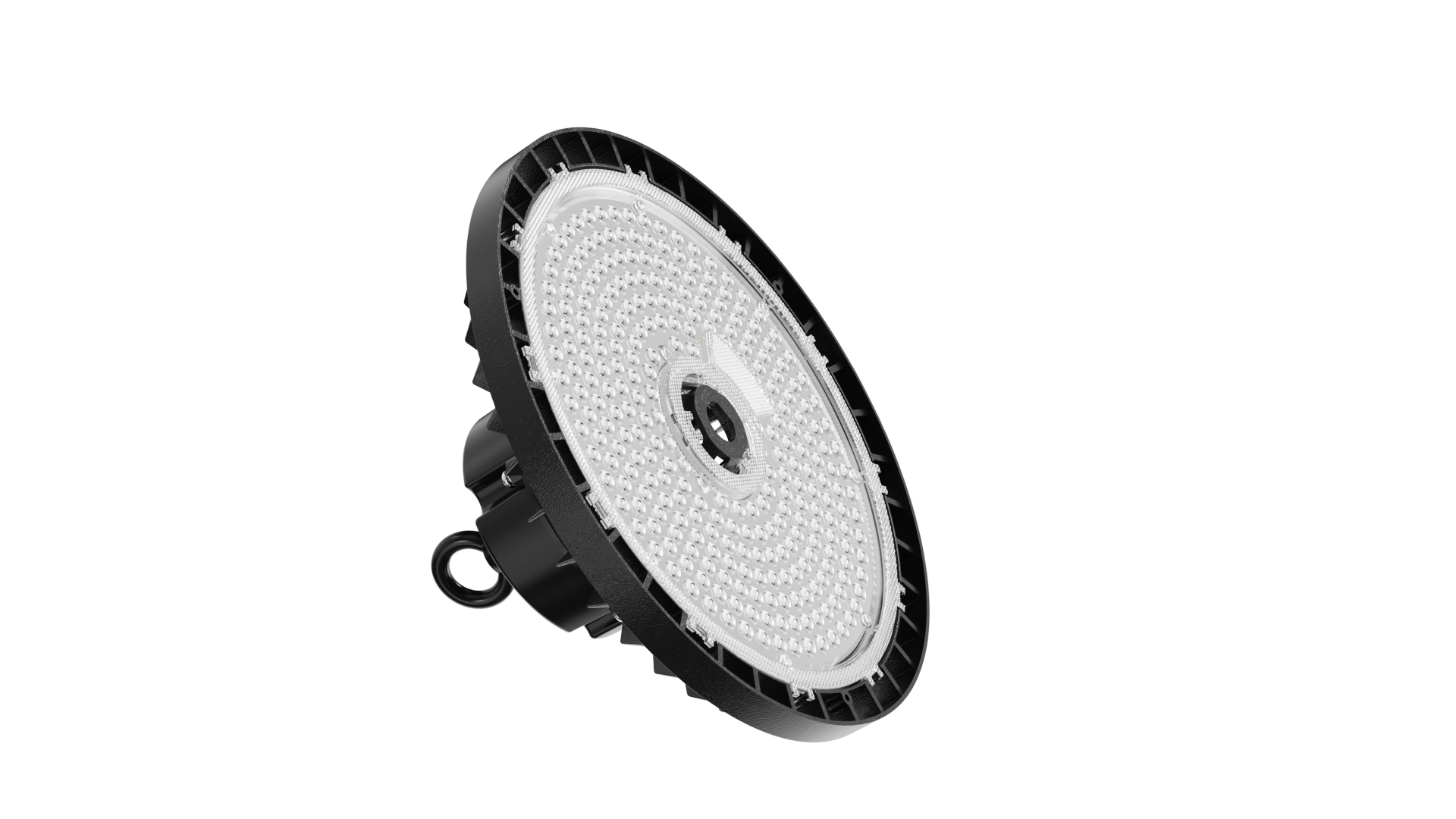
The 90 degree lens high bay is a purpose-built industrial lighting solution designed to deliver focused, high-intensity illumination across large interior spaces. Unlike standard wide-angle fixtures, this luminaire uses a precision-engineered 90 degree beam angle to concentrate light directly downward, maximizing the usable light on work surfaces while minimizing wasted output toward walls and ceilings. This makes it an exceptionally efficient choice for environments where vertical clearance is significant and accurate task lighting is a priority. At its core, the 90 degree lens high bay integrates advanced LED technology with an optically optimized polycarbonate or tempered glass lens. The lens is engineered to shape and direct the light beam with minimal dispersion, ensuring that photons travel in a controlled cone that covers the target area evenly. This optical precision translates directly into higher foot-candle readings at floor level without requiring higher wattage, which is a key advantage in energy-conscious facility management. The fixture typically operates across a wide voltage range, making it compatible with diverse electrical infrastructures found in warehouses, manufacturing plants, gymnasiums, and distribution centers. Many models incorporate a driver with power factor correction above 0.95 and total harmonic distortion below 20 percent, ensuring clean power consumption and compatibility with sensitive equipment nearby. Thermal management is another defining technological feature. The housing is constructed from die-cast aluminum with integrated heat-sink fins that passively dissipate heat away from the LED array, extending the rated lifespan to 50,000 hours or more under standard operating conditions. The 90 degree lens high bay is also available with optional dimming controls, motion sensors, and daylight harvesting compatibility, enabling smart building integration. Its IP65 rating in most configurations means it resists dust ingress and water jets, making it suitable for food processing facilities, cold storage areas, and other demanding environments. Whether retrofitting an aging metal halide system or specifying lighting for a new construction project, the 90 degree lens high bay delivers a compelling combination of optical performance, energy efficiency, and long-term reliability that facility managers and electrical engineers consistently rely on.


New Product Recommendations

Choosing the right high bay fixture can have a direct impact on your energy bills, worker productivity, and long-term maintenance costs. The 90 degree lens high bay stands out from the competition in ways that matter to the people who actually run facilities day to day. Here is a straightforward look at what makes this fixture a smart investment. First, it cuts your energy costs significantly. The focused 90 degree beam puts light exactly where you need it, on the floor and work surfaces, rather than scattering it toward walls and ceilings where it does no useful work. Because the optical system is so efficient, you can often achieve the same or better illumination levels with a lower-wattage fixture compared to a wide-angle alternative. Many facilities that switch to the 90 degree lens high bay report energy savings of 40 to 60 percent compared to their previous metal halide or fluorescent systems. Those savings add up fast in a large warehouse or manufacturing plant running lights for two or three shifts a day. Second, it reduces maintenance headaches. Traditional high-intensity discharge lamps need replacement every 10,000 to 20,000 hours, and changing bulbs at heights of 20 to 40 feet requires specialized equipment and labor time. The 90 degree lens high bay is rated for 50,000 hours or more, which means you can go years without touching the fixture. Fewer replacements mean lower labor costs, less downtime, and fewer safety risks associated with working at height. Third, it improves visibility and worker comfort. A well-directed beam with a consistent 90 degree spread eliminates the dark spots and uneven patches that plague older lighting systems. Workers can see clearly without straining their eyes, which reduces fatigue and errors on the production floor or in the warehouse. Better visibility also supports safety compliance, since OSHA and other regulatory bodies set minimum illumination standards for industrial workplaces. Fourth, it turns on instantly. Unlike metal halide lamps that take several minutes to warm up and restrike after a power interruption, the 90 degree lens high bay reaches full brightness the moment power is applied. This is a practical advantage in facilities that use motion-activated controls or experience occasional power fluctuations. Fifth, it works with smart controls. The fixture is compatible with 0-10V dimming systems, occupancy sensors, and daylight harvesting controllers. You can program lights to dim automatically when a zone is unoccupied or when natural light through skylights is sufficient, adding another layer of energy savings on top of the already efficient LED source. Sixth, it is built to last in tough environments. The die-cast aluminum housing, IP65 dust and water resistance, and robust lens material mean the fixture keeps performing in cold storage, food processing, chemical plants, and other challenging spaces where lesser fixtures fail prematurely. When you add up the energy savings, the reduced maintenance burden, the improved working conditions, and the compatibility with modern building automation systems, the 90 degree lens high bay delivers a return on investment that most facility managers see within two to three years of installation.

Practical Tips

What Are the Best Applications for LED Panel Light in Commercial Interiors?

10

Mar

What Are the Best Applications for LED Panel Light in Commercial Interiors?

Commercial interior spaces demand lighting solutions that combine energy efficiency, uniform illumination, and aesthetic appeal. LED panel light technology has emerged as the preferred choice for modern commercial environments, offering superior perf...
View More
How Does Indoor Lighting Improve Comfort and Productivity in Modern Spaces?

08

Apr

How Does Indoor Lighting Improve Comfort and Productivity in Modern Spaces?

Indoor lighting serves as the foundation of human comfort and performance in modern workspaces, residential environments, and commercial facilities. The way light interacts with our biological systems, visual perception, and psychological well-being ...
View More
What Are the Advantages of T8 LED Tube for Large Lighting Retrofit Projects?

28

Apr

What Are the Advantages of T8 LED Tube for Large Lighting Retrofit Projects?

Large-scale lighting retrofit projects present unique challenges that require careful consideration of multiple factors, from energy efficiency and maintenance costs to installation complexity and long-term performance. When facility managers and lig...
View More
How Can Grille Light Support Efficient Lighting Layouts in Buildings?

01

May

How Can Grille Light Support Efficient Lighting Layouts in Buildings?

Efficient lighting layouts in modern buildings require careful consideration of both functional illumination and energy performance, and grille light fixtures have emerged as a cornerstone solution for architects and facility managers seeking optimal...
View More

Get a Free Quote

Our representative will contact you soon.
Email
Name
Company Name
Message
0/1000

90 degree lens high bay

Precision Optical Engineering for Maximum Light Delivery

Precision Optical Engineering for Maximum Light Delivery

The defining characteristic of the 90 degree lens high bay is its precision optical system, and understanding why that matters requires a brief look at how light behaves in large industrial spaces. When a light source emits photons in all directions, a significant portion of that energy travels sideways or upward, bouncing off walls and ceilings before eventually reaching the floor. Each reflection absorbs some of the light energy, so by the time that scattered light reaches a work surface, it has lost much of its original intensity. A wide-angle fixture compensates for this inefficiency by using higher wattage, which drives up energy costs. The 90 degree lens high bay takes a fundamentally different approach. Its optically engineered lens captures the light from the LED array and redirects it into a precise 90 degree cone aimed directly downward. This means the vast majority of the lumens produced by the fixture land on the target area without bouncing off secondary surfaces. The result is a higher maintained illuminance level at floor height for the same or lower wattage input. In practical terms, a facility manager replacing 400-watt metal halide fixtures with 90 degree lens high bay units rated at 150 to 200 watts can achieve equal or superior foot-candle readings on the work surface. The lens itself is typically manufactured from UV-stabilized polycarbonate or high-transmission tempered glass, both of which maintain their optical clarity over the full rated lifespan of the fixture. There is no yellowing, hazing, or light loss due to lens degradation under normal operating conditions. The optical design also contributes to uniformity. A well-designed 90 degree lens high bay produces a consistent light distribution pattern that overlaps cleanly with adjacent fixtures, eliminating the bright spots directly under each unit and the dark zones between them. This uniformity is critical in manufacturing and quality control environments where workers need to detect surface defects, read labels, or operate precision machinery. Uniform illumination reduces eye strain and cognitive fatigue, which translates into fewer errors and higher throughput over a full shift. For facility planners, the predictable beam pattern of the 90 degree lens high bay also simplifies the photometric layout process. Lighting designers can space fixtures with confidence, knowing that the published IES photometric data accurately reflects real-world performance. This reduces the risk of over-lighting some zones and under-lighting others, and it helps ensure that the installation meets the required illuminance levels on the first attempt without costly rework.
Long Lifespan and Low Maintenance Costs That Protect Your Budget

Long Lifespan and Low Maintenance Costs That Protect Your Budget

One of the most compelling practical benefits of the 90 degree lens high bay is the dramatic reduction in maintenance costs it delivers over its operational life. To appreciate this advantage fully, consider the true cost of maintaining a conventional high-intensity discharge lighting system in a large facility. A typical metal halide lamp has a rated life of 10,000 to 20,000 hours, and its lumen output degrades significantly before it actually fails. Industry practice recommends replacing metal halide lamps at around 70 percent of their rated life to maintain acceptable illumination levels, which means real-world replacement intervals are often shorter than the rated lifespan suggests. In a facility with 100 fixtures running two shifts per day, that translates into a lamp replacement cycle of roughly every two to three years. Each replacement requires a maintenance technician, a lift or scaffolding to reach fixtures mounted at 20 to 40 feet, and the cost of the lamp itself. When you factor in labor time, equipment rental, and the productivity disruption caused by taking a section of the facility offline, the cumulative maintenance cost over a decade is substantial. The 90 degree lens high bay changes this equation entirely. With a rated lifespan of 50,000 hours and an L70 lumen maintenance rating that means the fixture still delivers 70 percent of its initial output at that point, the fixture can operate for 12 to 15 years under typical two-shift conditions before any intervention is needed. The LED driver, which is the component most likely to require attention before the LED array itself, is often designed for field replacement without removing the entire fixture from its mounting position. This means that even in the unlikely event of a driver failure, the repair is quick and does not require extended downtime. The financial impact of this longevity is significant. Facilities that have transitioned to the 90 degree lens high bay consistently report that their annual lighting maintenance budgets drop by 60 to 80 percent compared to their previous HID systems. Those savings can be redirected toward other capital improvements or simply flow directly to the bottom line. Beyond the direct cost savings, the reduced maintenance frequency also improves safety. Every time a technician works at height to replace a lamp, there is an inherent risk of injury. Fewer maintenance events mean fewer opportunities for accidents, which supports a stronger overall safety record and reduces liability exposure for the facility operator.
Smart Control Compatibility and Energy Management for Modern Facilities

Smart Control Compatibility and Energy Management for Modern Facilities

The 90 degree lens high bay is not just a passive light source. It is a fully compatible component of modern building energy management systems, and this compatibility opens up a second tier of energy savings beyond what the efficient LED source alone provides. Understanding how these control integrations work in practice helps facility managers and energy engineers see the full value proposition of the fixture. At the most basic level, the 90 degree lens high bay supports 0-10V analog dimming, which is the most widely used dimming protocol in commercial and industrial lighting. This means the fixture can be connected to any standard 0-10V dimming controller, occupancy sensor, or building automation system without requiring proprietary hardware or specialized programming. When an occupancy sensor detects that a zone is unoccupied, it can instruct the fixture to dim to a standby level of 10 to 20 percent, maintaining enough light for safety while dramatically reducing energy consumption. When workers return to the zone, the fixture ramps back to full output within seconds, with no warm-up delay. Daylight harvesting is another control strategy that pairs naturally with the 90 degree lens high bay. In facilities with skylights or clerestory windows, a photosensor can monitor the ambient light level and automatically reduce the output of nearby fixtures when natural light is sufficient. This strategy can reduce lighting energy consumption by an additional 20 to 30 percent in zones with good daylighting, and the 90 degree lens high bay responds smoothly to these adjustments without flickering or color shifting. For facilities pursuing LEED certification or other green building standards, the combination of the efficient 90 degree lens high bay with smart controls can contribute meaningfully to energy performance credits. The fixture's high power factor and low total harmonic distortion also make it compatible with sensitive manufacturing equipment and data center environments where power quality is a concern. Some advanced versions of the 90 degree lens high bay incorporate wireless control capability, allowing individual fixtures or groups of fixtures to be programmed and monitored through a central software platform. This enables granular energy reporting, predictive maintenance alerts based on operating hours, and the ability to create custom lighting scenes for different operational modes such as normal production, cleaning, emergency, and inspection. The combination of inherent LED efficiency and intelligent control compatibility makes the 90 degree lens high bay a future-ready solution that continues to deliver value as energy costs rise and building automation technology advances.

Get a Free Quote

Our representative will contact you soon.
Email
Name
Company Name
Message
0/1000